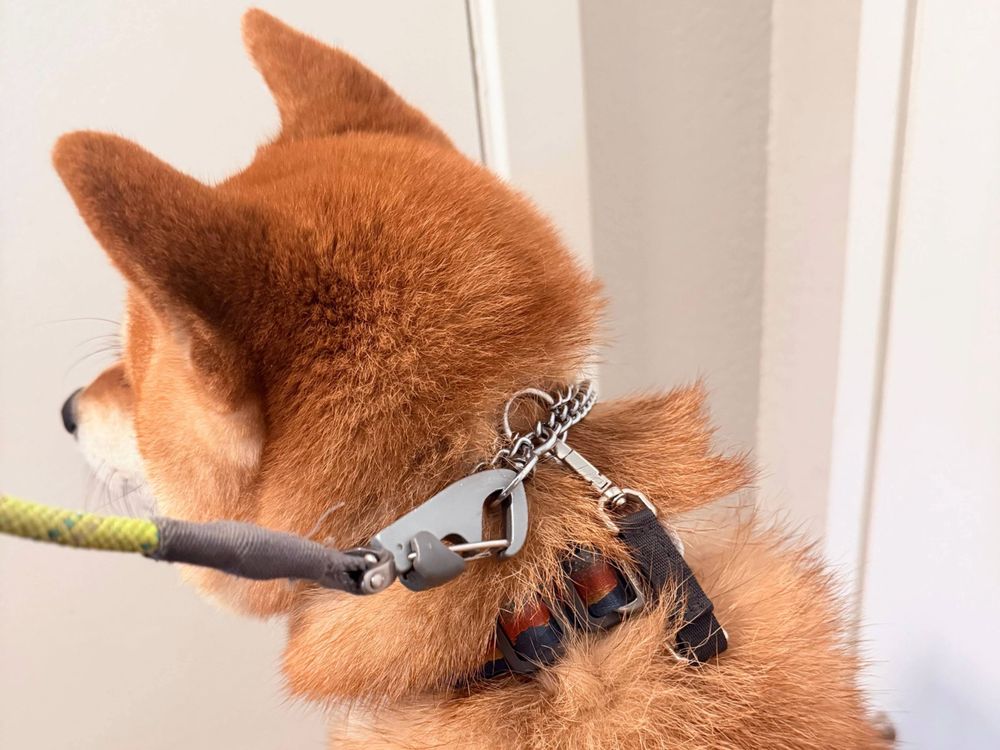
Fit a prong collar correctly and it's a precise communication tool. Fit it wrong—or skip the safety clip—and you've got a loose dog the moment the hardware fails. This guide covers placement, how to put it on, brand quality, and the one backup piece every prong collar setup requires.
High on the neck, directly behind the ears and tucked just under the jawline. At that position, the collar delivers a clean pressure-and-release signal without putting force on the trachea. If it slides down toward the shoulders—even an inch—it loses precision, presses in the wrong place, and is loose enough to fail.
Test the fit: you should be able to slide one finger under the collar, but the links shouldn't shift when you apply light leash pressure.
Sliding a prong collar over your dog's head is the most common mistake. Don't do it. Instead:
1. Unhook two connected links to open the collar into a C-shape.
2. Wrap it around the high neck position, behind the ears.
3. Re-link the open section—add or remove links until the collar sits snugly at that position with no slack.
You want zero slack when the dog is standing still. Slack means the collar shifts down and the links can unseat under pressure.
Yes—more than most owners expect. Cheap retail prong collars are stamped from flat metal, leaving cut tips and flat contact points that press unevenly on the neck.
Herm Sprenger collars—the standard in professional training—use rounded, blunt tips and a center plate. The center plate keeps direct pressure off the trachea; the blunt tips distribute contact evenly across the musculature. It's the difference between a dull nudge and a sharp poke.
Gauge matters too. The 2.25mm is what most professional trainers reach for on medium to large dogs. The heavier 3.2mm feels like working with oven mitts—you lose the fine motor signal that makes the tool responsive in the first place.
Yes. Always. Prong collars are friction-fit: the prongs press against the links under tension, and tension is all that holds them together. A sudden head shake, a dog that ducks and lunges simultaneously, or a link that isn't perfectly seated can pop the collar open in an instant.
A safety clip—a small carabiner or snap clip—connects the collar's live ring to a flat or martingale collar worn underneath. If the prong hardware fails, the leash is still attached to something. It's not optional gear; it's the only thing standing between a near-miss and a loose dog in traffic.
Set the collar high, link it on correctly, and always run a backup clip. Done right, a prong collar is one of the clearest signals you can give a dog. Done wrong, it's just an expensive way to lose them.