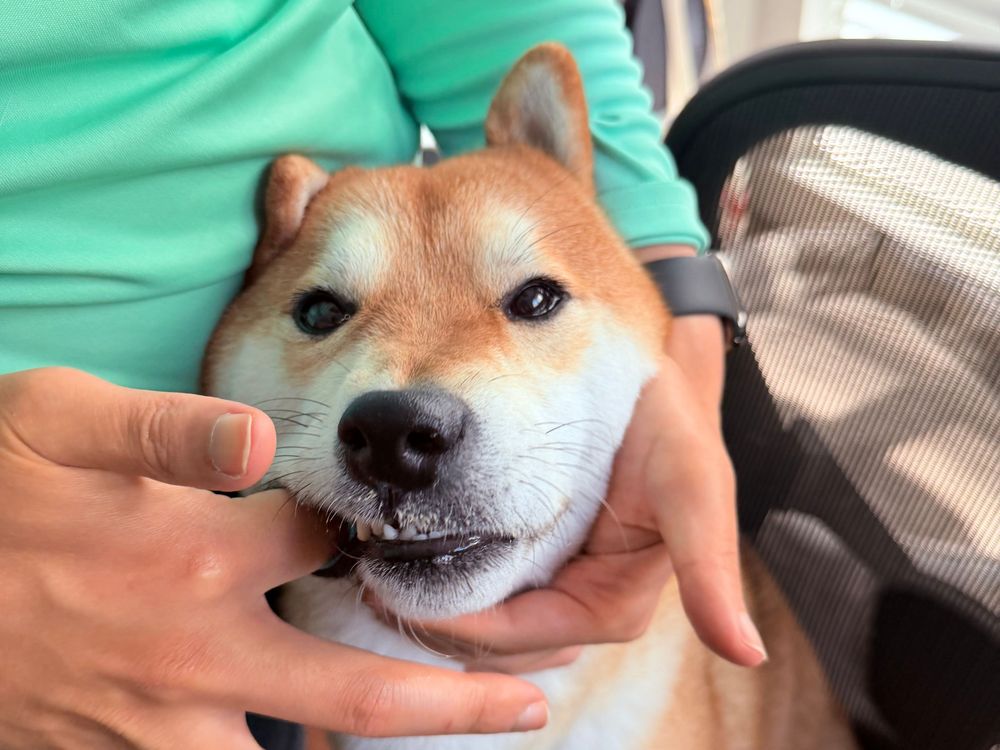
Learn to brush your dog's teeth the right way and the whole session drops to 30 seconds—with their cooperation, not their resistance. The difference isn't effort. It's the paste and where you point the bristles.
Skip the baking soda. It's abrasive, salty, and most dogs hate the taste—which means every session starts as a negotiation before the brush is even out. Worse, it only works mechanically: no scrubbing contact, no cleaning.
Enzymatic toothpastes—Virbac is the benchmark—use glucose oxidase to chemically break down plaque. Even if your brushing technique isn't perfect, the paste keeps working between strokes. They come in poultry or beef flavors, so your dog treats the whole thing as a reward rather than a chore. That palatability difference alone cuts resistance in half.
One hard rule: never use human toothpaste. Many brands contain xylitol, which is toxic to dogs. The foaming agents cause stomach upset when swallowed, and dogs can't spit.
Baking soda removes some surface stain if your dog tolerates it and you scrub long enough—but it has no chemical action on plaque, and most dogs resist the salty taste. You're fighting both the brush and the paste for results that are half as good. Enzymatic paste makes every second of a short session count.
Start on your finger. Put a pea-sized amount of enzymatic paste on your fingertip and let your dog lick it. Do this for a few days before the brush appears. Once they're expecting the flavor, the brush is much less alarming.
Focus only on the outside. The cheek-facing surfaces are where plaque and tartar accumulate; the tongue-side cleans itself. Don't fight to get the inside—you're wasting time and risking a bite for surfaces that don't need you.
Angle the bristles at 45 degrees toward the gum line. That's where gingivitis starts. You don't need pressure—the enzymatic paste handles the chemistry. Small circles, light contact, move along the cheek side of each tooth.
Keep it short. Thirty seconds a day beats two minutes once a week. Frequency is the whole game.
Daily is the target. Even every other day is significantly better than weekly. Plaque starts mineralizing into tartar within 24–48 hours—once it's calcified, no home brushing touches it, and you're looking at a vet cleaning under anesthesia. Consistency is easier to build when you attach brushing to something you already do: morning coffee, the evening feeding, whatever's already non-negotiable in your day.
The whole thing takes less time than refilling the water bowl.